
Granicus alternative
If you have to request a quote to learn the price, you're not the customer they built it for.
Enterprise govtech is sold to agencies with a procurement department and a communications team. A fire protection district with nine staff is not that, and it should not have to run a formal procurement to publish accessible agendas. Mainfolk publishes its price: $149 a month, flat, month to month, with WCAG 2.1 AA in the markup and no contract to sign.
No card, no account, no RFP. A PO and a W-9 on request.
- Price published, not quote-only
- Built for districts, not enterprises
- WCAG 2.1 AA by construction
- Month to month, export anytime
First, the fair part, and an honest limit.
Granicus runs real infrastructure for large agencies: legislative management, meeting streaming, records, and mass communications at a scale that genuinely requires an enterprise platform. If your entity needs integrated agenda workflow, roll-call voting, or broadcast streaming, Mainfolk does not do those things, and you should buy the platform that does.
What we do is the part most small districts actually need: accessible, current, findable pages, with agendas, minutes, and notices published as real pages and downloadable documents that residents and search engines can both read. If that is the job, an enterprise suite is a lot of contract for it.
Side by side
Two different products for two different buyers.
This is not a feature-count argument. It is a question of which shape of organization each product was designed and priced for.
| Enterprise govtech suite | Mainfolk Civic | |
|---|---|---|
| Built for | Cities and agencies with procurement and comms teams | Villages, townships, districts, departments and boards |
| Pricing | Quote-only, varies by population and module mix | Published: $149/mo flat, about $1,788/yr |
| Term | Multi-year, commonly with an annual escalator | Month to month, no escalator, export anytime |
| How you buy it | Formal procurement or a state contract vehicle | Under bid threshold, consent agenda, no RFP |
| Accessibility | Varies by module and add-on | WCAG 2.1 AA by construction, included at every tier |
| Agenda workflow & streaming | Yes, a core strength | No. Agendas and minutes publish as accessible pages and documents |
| Time to launch | Months, after procurement | First draft in about a minute, live in days |
Enterprise suite characteristics are drawn from vendors' public materials and municipal procurement records, 2024–2026. Pricing in that category is generally quote-only, so we deliberately do not publish a figure on their behalf. Ask both vendors for a written quote and compare total five-year cost. Product names are trademarks of their respective owners, and Mainfolk is not affiliated with, endorsed by, or sponsored by any of them.
See it, don't take our word for it
$149/mo, no procurement. Here's what that actually buys.
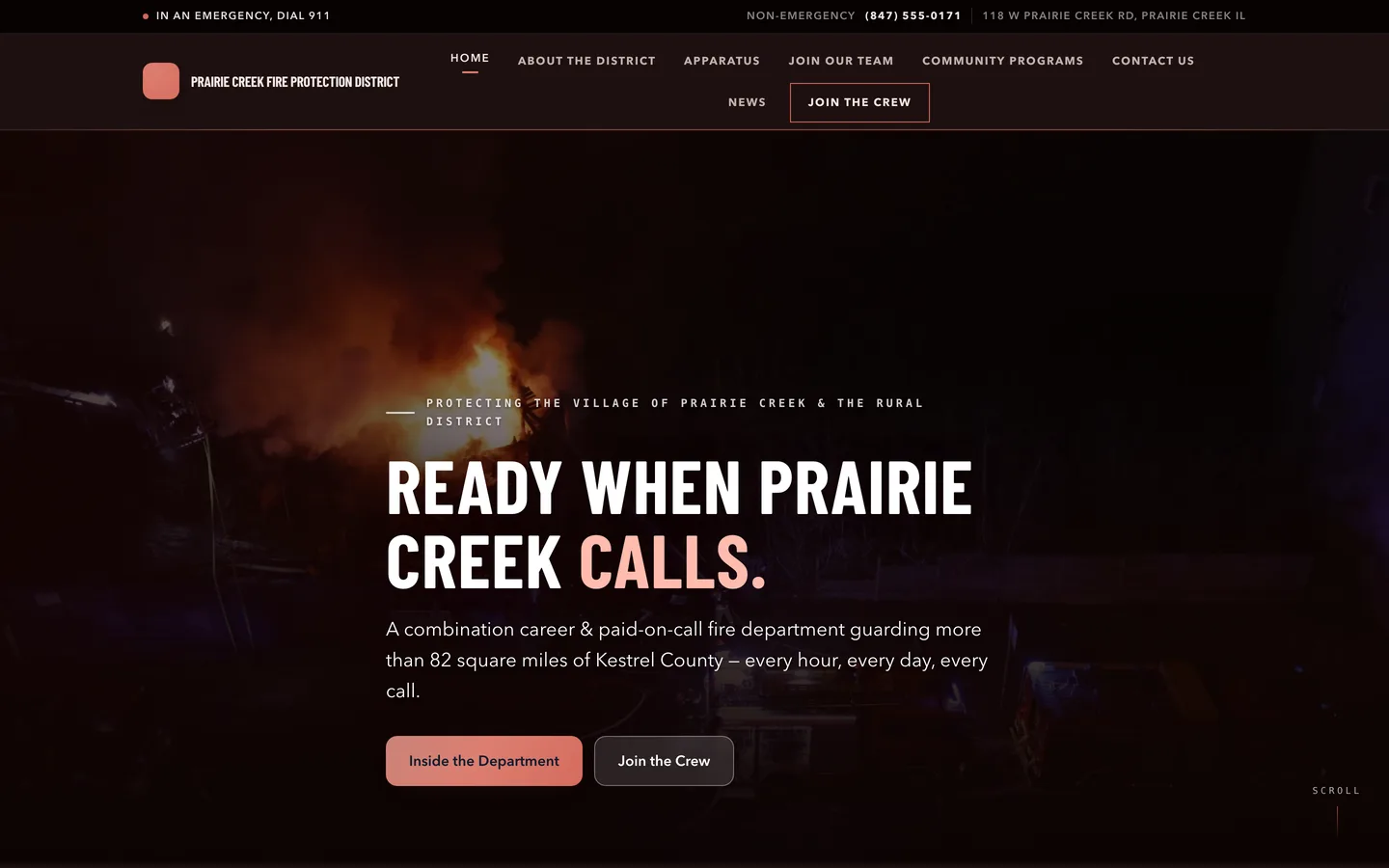
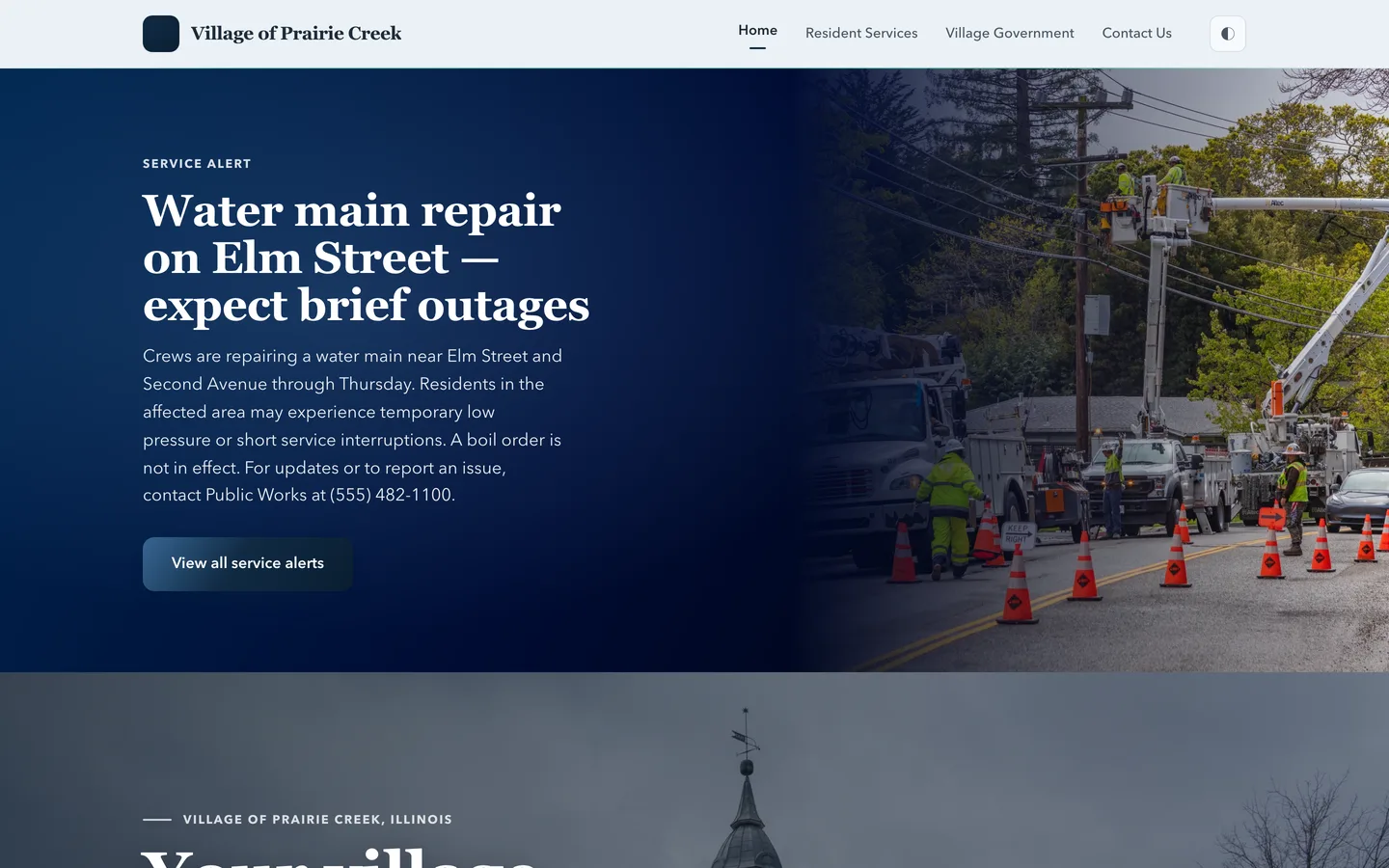
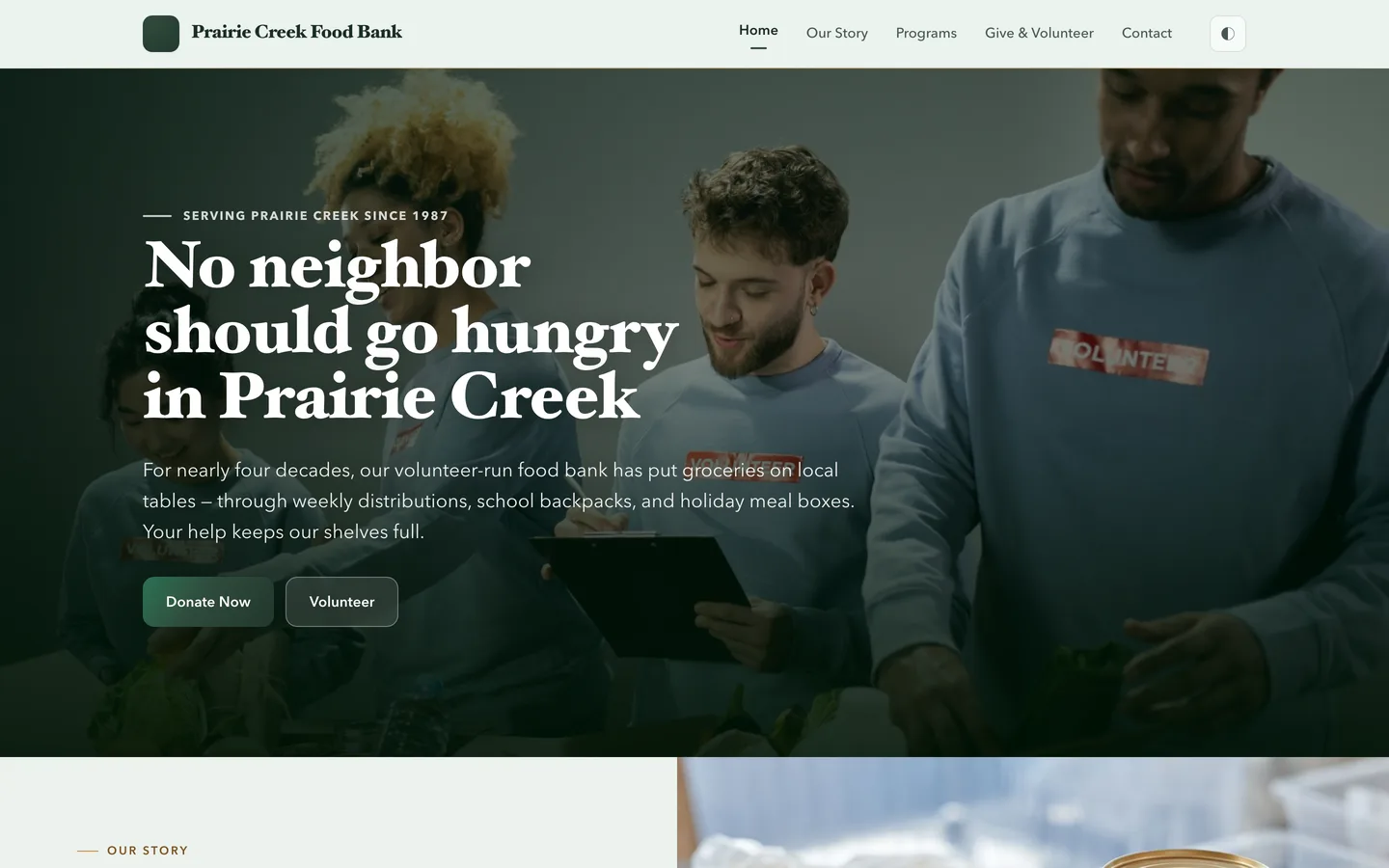
Granicus is quote-only, and the quote comes after a sales process. Ours is published, and here's the proof it isn't a stripped-down version of the real thing: a fire district, a village, and a nonprofit, all live on the same $149/mo plan. Open one, tab through it, run it through a screen reader. A small district doesn't need a procurement cycle to see what it's getting.
ADA Title II
Special districts have the same obligation and a tenth of the staff.
A fire protection district, park district, library board, township, or water district is a public entity under ADA Title II exactly like a city is. The obligation does not scale down with your budget. What can scale down is what you pay to meet it, and how much procurement stands between you and a compliant site.
Governments serving 50,000 or more residents are required to meet WCAG 2.1 AA.
Under 50,000 residents, plus special districts. Fire protection districts, park districts, and library boards are all on this line.
The deadlines were extended in April 2026, and DOJ has been clear the requirement is not going away. We engineer to the standard, and your counsel advises on your entity's specific obligations. See how we build it or the dedicated special district page.
What Civic includes
The whole thing, for one flat number.
No module menu, no per-seat licensing, no accessibility add-on line, and no year-three escalator. One price, everything in it, and you see the finished site before you pay any of it.
- Agendas, minutes & public notices published as accessible pages and downloadable documents residents can actually find.
- Emergency alert banner for a boil order, a burn ban, a road closure, or a storm shelter opening. Posted in seconds.
- Auto-published accessibility statement, kept current, so you have something to point a resident or a complainant at.
- Unlimited staff editors. The clerk, the chief, and the trustee each get a login. No per-seat charge.
- We migrate your current site free as part of onboarding, with redirects so existing links keep working.
- Hosting, SSL, updates & findability included, plus AI-assistant optimization so residents get you as the answer.
The honest price
$149 a month, published right here.
You should not have to book a discovery call to find out what a website costs.
About $1,788 a year, all in. Under every state's competitive-bid threshold, so your board approves it on the consent agenda instead of running a procurement that costs more in staff time than the contract does.
★ Need a PO, a W-9, or a written quote for a board vote? Ask, and you will have one. No card, no account.Also weighing CivicPlus, Revize, Town Web, a WordPress build, or Wix and Squarespace?
Questions
Asked and answered.
How much does Granicus cost compared to Mainfolk?
Enterprise govtech suites in this category are generally quote-only rather than publicly priced, and the figure depends on population, module mix, and the contract vehicle, so we are not going to put a number in their mouth. Mainfolk publishes its price: Civic is $149 a month flat, about $1,788 a year, with no setup fee and no term. Ask both vendors for a written quote and compare the total five-year cost, including escalators and any accessibility add-on.
Is Mainfolk right for a special district?
It is one of the cases we built for. Fire protection districts, park districts, library boards, townships, and water districts all face the same ADA Title II obligations as a city, usually on the April 26, 2028 deadline, but with a fraction of the staff and no procurement department. See the dedicated special district page.
What if we need agenda management or meeting streaming?
Mainfolk publishes agendas, minutes, and notices as accessible pages and downloadable documents, which is what most small districts actually need. It is not a legislative-management or meeting-streaming platform. If your entity genuinely requires integrated agenda workflow, roll-call voting, or broadcast streaming, an enterprise suite is the better fit, and we will say so rather than sell you something that does not do it.
Do we have to go through a formal procurement?
Almost certainly not at this price. Roughly $1,788 a year sits under every state's competitive-bid threshold, so most boards approve it on the consent agenda. Confirm your own entity's threshold and purchasing policy with your attorney or clerk, and we will supply a written quote, a W-9, and PO-ready paperwork.
Who supports us after launch?
Champlin Enterprises, a small American software company in Gurnee, Illinois. You reach the engineers who built the platform rather than a tier-one queue. Unlimited staff editors are included, so routine updates like posting a notice do not require a support ticket in the first place.
Can we see a real site before we decide?
Yes, and you should. Prairie Creek Fire Protection District and the Village of Prairie Creek are live right now, built end to end on Mainfolk. Open them on your phone, run a speed test, and navigate them with only the keyboard.
For town hall & Main Street
A published price, and no procurement to get there.
See the finished site before you pay anything, and take a written quote to your next board meeting.