
CivicPlus alternative
Enterprise civic software, priced for a city with a web team.
If your village, district, or department is staring at a five-figure annual quote and a multi-year term for what is essentially accessible, current, findable pages, there is another way to buy this. Mainfolk Civic is $149 a month, flat, month to month, with WCAG 2.1 AA built into the markup instead of sold to you as an overlay add-on. You approve the finished site before you pay a dollar.
No card, no account, no RFP. A PO and a W-9 on request.
- ~$1,788/yr, all in
- Under bid threshold, no RFP
- Accessibility included, not an add-on
- Month to month, export anytime
First, the fair part.
CivicPlus is a serious company with a deep product line, and for a large city it is often the right call. If you are running permit workflows, utility billing, agenda-and-minutes automation tied to a clerk's office, a 311 request system, and a communications team that lives in the CMS all day, an enterprise suite earns its price. We are not going to pretend otherwise.
The mismatch is with everyone else. A village of 2,400, a fire protection district with nine paid staff, a police department, a library board, a township. Those organizations get quoted from the same enterprise menu, need maybe fifteen percent of it, and end up paying five figures a year and signing a multi-year term for a website. That is the gap Mainfolk was built for.
Side by side
What you're actually comparing.
The line that matters for a small entity is not the feature count. It is cost, term, accessibility, and how you are allowed to buy it.
| Option | Typical cost / yr | Contract & lock-in | Accessibility | Procurement | Who answers |
|---|---|---|---|---|---|
| CivicPlus | $8,000–$25,000 | Multi-year + ~5–7% escalator | ~$4,200/yr overlay add-on | Formal RFP | Ticket queue |
| Revize | ~$5,900 (+ setup) | 5-year term; early exit = balance due | Overlay widget | Formal RFP | Ticket queue |
| A volunteer's WordPress build | $0–$2,000 | No continuity when they move on | None, and no compliance story | N/A | Nobody, really |
| Mainfolk Civic | ~$1,788 | Month to month, export anytime | WCAG 2.1 AA by construction, included | Under bid threshold, no RFP | The engineer who built it |
Figures from vendors' published pricing and municipal procurement records, 2024–2026. Re-verify at contract time, since quotes vary by population, module mix, and state contract vehicle. Product names are trademarks of their respective owners, and Mainfolk is not affiliated with, endorsed by, or sponsored by any of them.
See it, don't take our word for it
No web department required. A small team can run this.
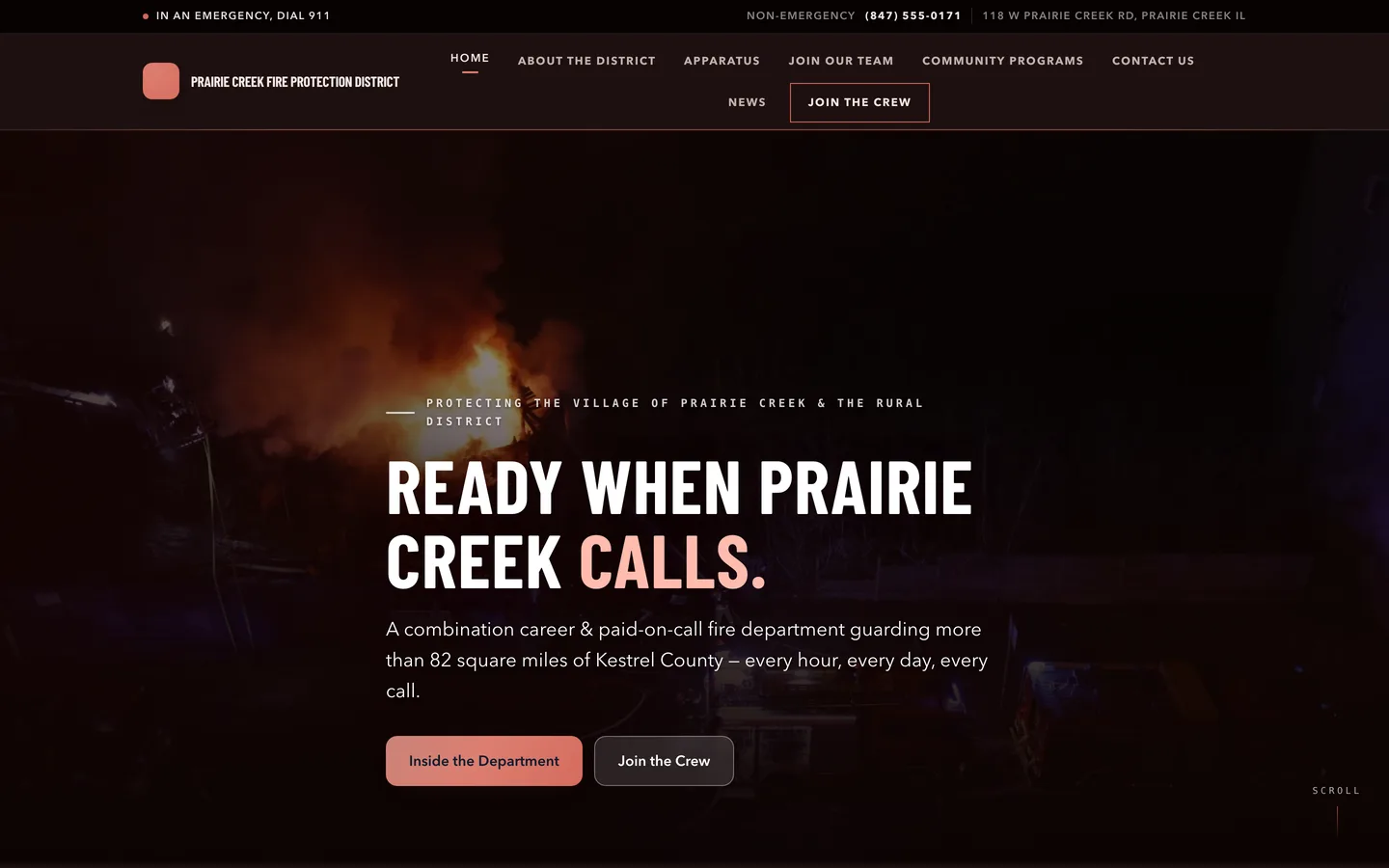
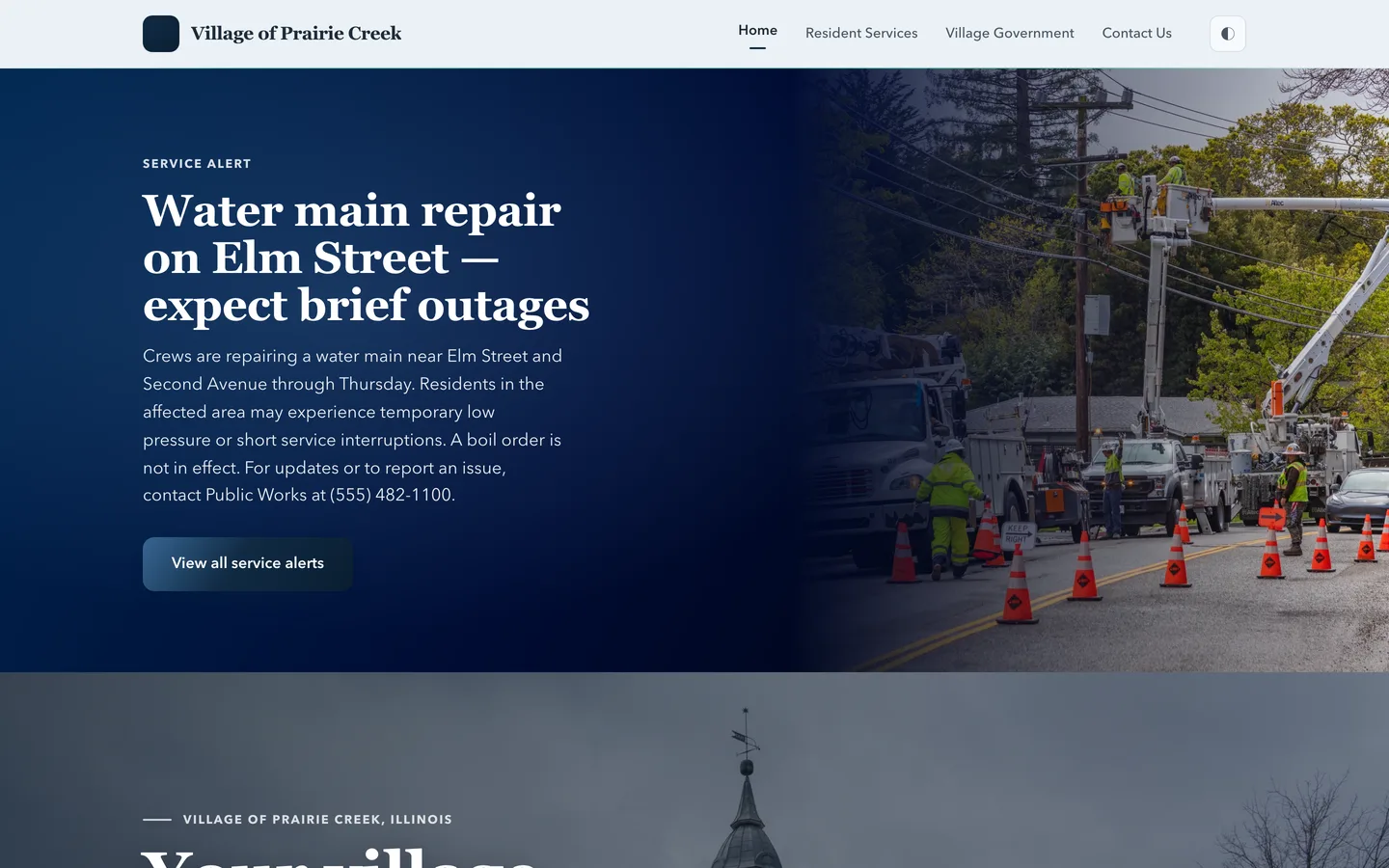
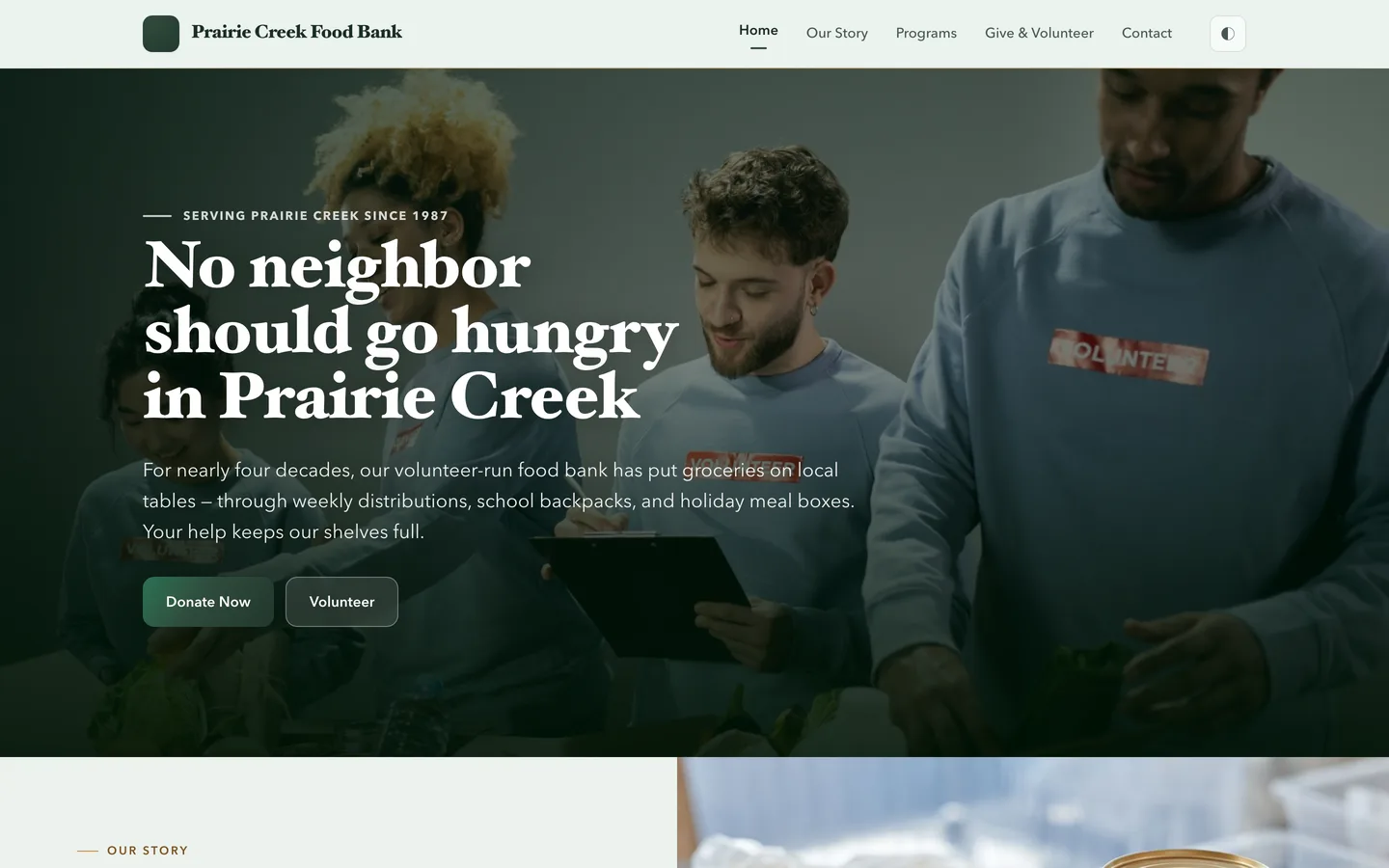
CivicPlus's price includes a module for everything, plus the staff and training to manage it. Here's what three small teams actually shipped on Mainfolk with no dedicated web department: a fire district, a village, and a nonprofit. Open one, tab through it, run it through a screen reader. That's what a modest budget and a small staff can maintain.
ADA Title II
An overlay widget is a line item. It isn't compliance.
The Department of Justice's ADA Title II web rule points at WCAG 2.1 AA, and the accessibility community has been consistent that bolt-on overlay widgets do not get an entity there. When accessibility is sold as an annual add-on, it tells you it was never part of the build. On Mainfolk it is the build: contrast, keyboard navigation, semantic structure, and alt text are part of the markup on every page, at every tier, at no extra cost.
Governments serving 50,000 or more residents are required to meet WCAG 2.1 AA.
Under 50,000 residents, plus special districts. Fire protection districts, park districts, and library boards are on the calendar too.
The deadlines were extended in April 2026, and DOJ has been clear the requirement is not going away. Building to the standard now beats scrambling later. We engineer to the standard, and your counsel advises on your entity's specific obligations. See how we build it.
Switching
The migration is on us, and you see it before you commit.
The reason entities stay on a contract they have outgrown is rarely the product. It is the dread of moving. So we removed that: on Civic we move your current site over for you as part of onboarding, free, and you approve the rebuilt site live before any money changes hands.
- We move the content. Agendas, minutes, notices, staff pages, and documents come across as part of onboarding, free.
- Old links keep working. We set up redirects so a bookmark in a resident's browser, or a link in a state filing, does not break.
- You approve it live first. The real site, on a real address, reviewed by your board before a dollar is spent.
- Time your exit. Tell us your renewal date and we will build alongside your current contract so there is no gap and no double-paying.
- Unlimited staff editors. The clerk, the chief, and the PIO each get their own login instead of sharing one seat.
- No exit penalty, ever. Month to month. Export your whole site anytime, free, and take it wherever you like.
The honest price
$149 a month. Flat. No escalator.
The same number in year four that you paid in year one.
About $1,788 a year, all in: hosting, the security certificate, worldwide fast delivery, updates, unlimited staff editors, the emergency alert banner, an auto-published accessibility statement, free migration, and search and AI-assistant optimization. Under every state's competitive-bid threshold, so your board approves it on the consent agenda instead of running an RFP.
★ Need a PO, a W-9, or a written quote for a board vote? Ask, and you will have one. No card, no account.Also weighing Revize, Granicus, Town Web, a WordPress build, or Wix and Squarespace?
Questions
Asked and answered.
Is Mainfolk a real alternative to CivicPlus for a small town?
For a village, township, fire protection district, police department, or library board, yes. Those organizations need accessible, current, findable pages for agendas, minutes, notices, staff, and services, and that is exactly what Mainfolk builds. If you are a city of 200,000 running permit workflows, utility billing, and a 311 system, an enterprise suite is genuinely the better fit, and we will tell you so rather than sell you something that does not fit.
How much cheaper is Mainfolk?
Mainfolk Civic is $149 a month flat, roughly $1,788 a year, with no setup fee. Published pricing and municipal procurement records for enterprise civic suites generally run $8,000 to $25,000 a year, often with a multi-year term and an annual escalator. Verify the current numbers at contract time, since quotes vary by population and module mix, but the order-of-magnitude difference is the point.
Do we have to run an RFP to buy Mainfolk?
Almost certainly not. At roughly $1,788 a year, Mainfolk Civic sits under every state's competitive-bid threshold, so most boards approve it on the consent agenda rather than running a months-long formal procurement. Confirm your own entity's threshold and purchasing policy with your attorney or clerk, and we will supply whatever documentation they need.
Is accessibility an extra cost?
No. WCAG 2.1 AA is engineered into the markup on every Mainfolk site at every tier: contrast, keyboard navigation, semantic structure, and alt text. It is not an accessibility overlay widget sold as an annual add-on, and DOJ has been clear that overlays are not what the ADA Title II rule points to. See how we build it.
What happens to our existing content if we switch?
On the Civic tier we move your current site over for you as part of onboarding, free. Your agendas, minutes, notices, staff pages, and documents come across, and we set up redirects so existing links and bookmarks keep working. Before any of that, you see the rebuilt site live and approve it. You do not pay until you have.
Are we locked into a contract?
No. Mainfolk is month to month with no multi-year term, no early-termination balance, and no automatic renewal escalator. You can export your entire site, content, and documents at any time, free. If we stop earning the $149, you leave and take everything with you.
Who actually supports us?
Champlin Enterprises, a small American software company in Gurnee, Illinois. When you email, you reach the engineers who built the platform rather than a tier-one queue reading from a script. That is a genuine advantage at our size, and it is one we will lose if we ever get big enough to stop doing it.
For town hall & Main Street
Put the difference back into the budget.
See the finished site before you pay anything, and take a written quote to your next board meeting.